Category: Dossier Cuba 21 English

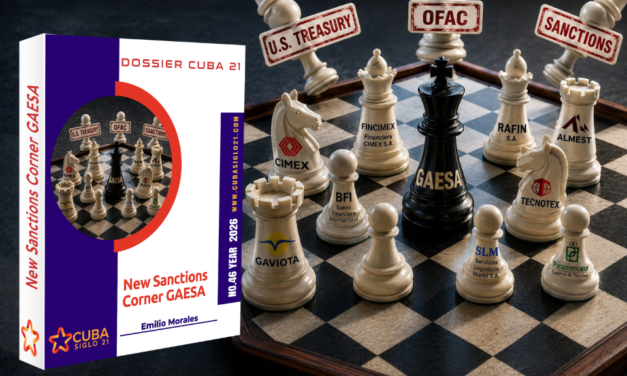
New Sanctions Corner GAESA

The new Treasury Department sanctions have significantly weakened GAESA’s financial and operational capacity by affecting not only the conglomerate itself but also those who attempt to act as its intermediaries; while the Cuban economy itself continues to lose its ability to sustain the tourism sector.

Read More

GAESA: Kleptocratic State

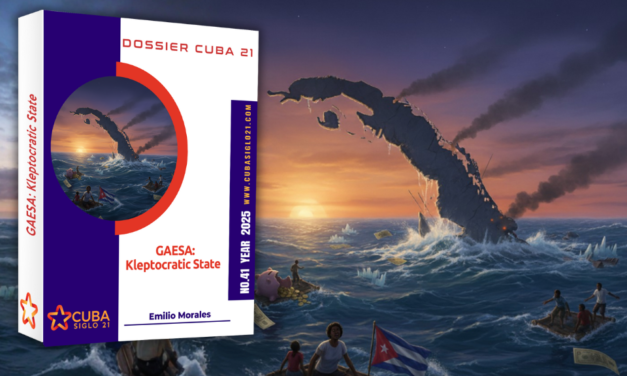
GAESA—the real power in Cuba—has driven the country into the worst financial crisis in its history. Behind the façade of socialism, a military oligarchy controls more than 70% of the economy and 95% of the nation’s financial system, while the civilian government operates as little more than a puppet. Miguel Díaz-Canel has no control over the country’s finances.

Read More

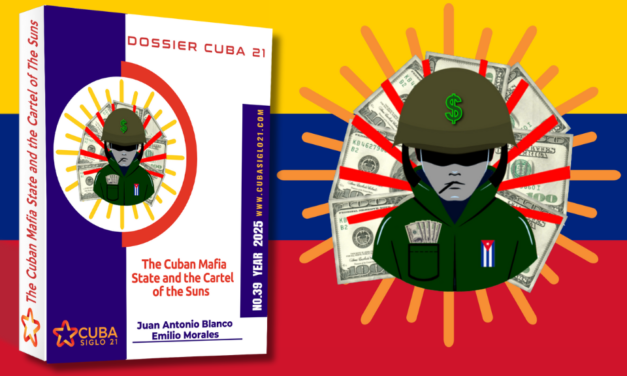
THE CUBAN MAFIA STATE AND THE CARTEL OF THE SUNS

The Cuban state has become a mafia-like actor operating at the heart of a transnational criminal network. The Cartel de los Soles was born and grew under this Cuban guidance. Cuba’s contribution to regional organized crime has been its strategic, military, and ideological advice in the creation and consolidation of the Cartel of the Suns, a drug trafficking organization that emerged in Venezuela.

Read More

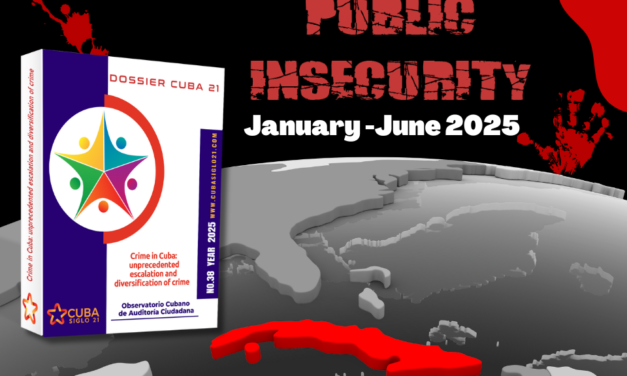
Crime in Cuba: unprecedented escalation and diversification of crime

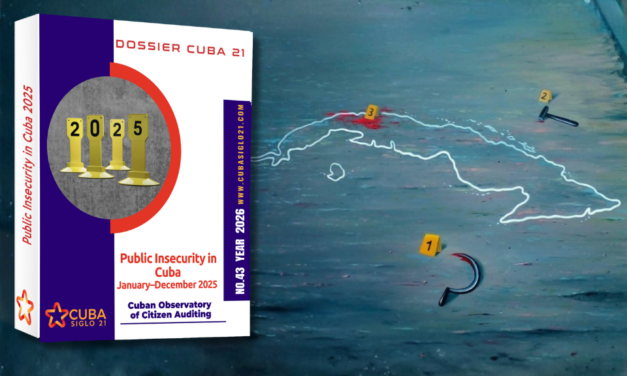
The Cuban Observatory of Citizen Auditing (OCAC) documented 1,319 verified crimes between January and June 2025, almost five times more than in the same period in 2023 and more than all that happened throughout 2024. This represents an average of 7.3 crimes per day, evidencing an unprecedented escalation in crime and a diversification of criminal types.

Read More

“Transparency”: Cuban students against the mafia state

Who really controls ETECSA? Where are its multi-million dollar revenues? Why is it not accountable either to the State or to the people? These questions are not limited to one company but point directly to the business apparatus that controls it: GAESA, the military-controlled conglomerate that manages 70% of the economy and 95% of the country’s foreign currency finances.

Read More
Loading